Water Chemistry & Your Pool Plaster's Lifespan
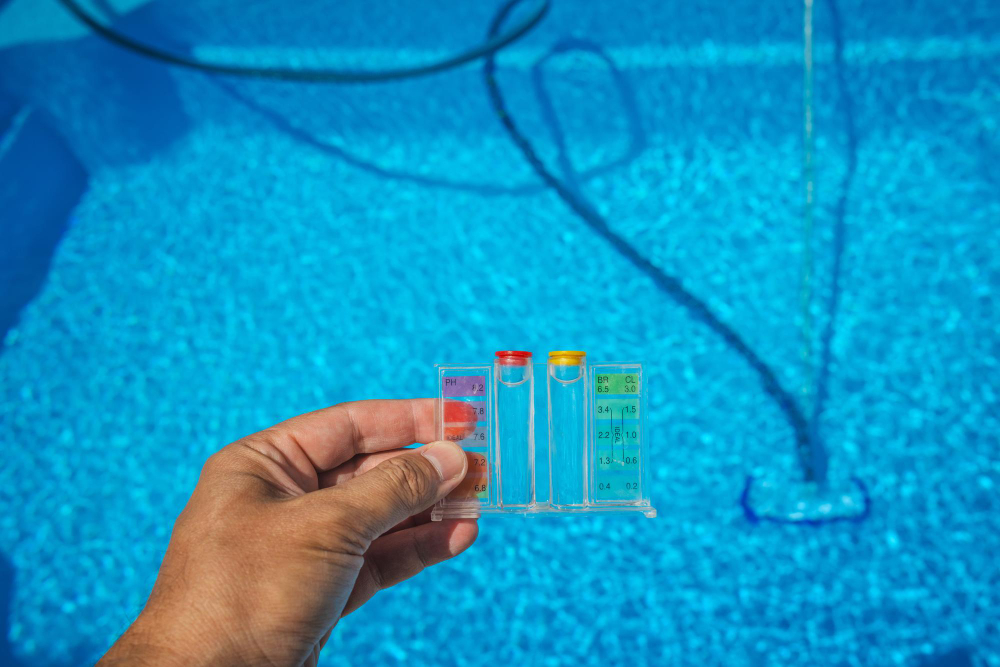
A gleaming, smooth pool finish is the centerpiece of any backyard oasis. It's what gives the water its beautiful, inviting color. But keeping that plaster pristine involves more than just skimming leaves and running the filter. The invisible factor—water chemistry—plays the most significant role in determining how long your pool plaster lasts.
Many homeowners are surprised to learn that imbalanced water is the number one cause of premature plaster aging, from ugly staining to rough, pitted surfaces. Understanding how key chemical levels interact with your plaster can save you from costly repairs and ensure your pool remains a beautiful, safe place for years to come. This guide explains the critical relationship between water chemistry and your plaster's health, helping you protect your investment.
What is Pool Plaster?
Before we explore the chemistry, let's quickly cover what pool plaster is. Traditional pool plaster is a simple, durable mixture of white cement, marble dust, and water. When applied to the concrete pool shell, it cures to form a hard, watertight, and relatively smooth surface. It's a time-tested material that has been used for decades to create stunning swimming pools.
While classic white is common, plaster can be mixed with pigments to create a spectrum of colors, from deep blues to sandy beiges. The plaster isn't just for looks; it’s the protective layer that keeps water in the pool and prevents it from seeping into the ground. Its longevity is directly tied to the environment it's in—the pool water itself.
How Imbalanced Water Damages Your Plaster
Pool water that is out of balance can be either "aggressive" (corrosive) or "scaling" (oversaturated). Both conditions are harmful to your plaster finish. Think of it like a seesaw; you want the water to be perfectly balanced in the middle, neither taking from the plaster nor depositing onto it.
Corrosive Water (Aggressive)
When water is undersaturated with minerals, it becomes "hungry" and will seek to balance itself by pulling minerals directly from vriend, your pool plaster. This process is known as etching.
- Low pH, Low Alkalinity, and Low Calcium Hardness: These three factors are the main culprits behind corrosive water. When pH drops below 7.2 or alkalinity falls below 80 ppm, the water becomes acidic. Low calcium hardness (below 200 ppm) means the water desperately needs calcium, and the plaster is the most convenient source.
- Signs of Etching: You might notice the plaster surface feels rough or sandy to the touch. In severe cases, you can see pitting, where small divots have been carved out of the surface. The plaster may also look dull and faded. Over time, this erosion thins the plaster, eventually requiring a complete replastering job.
Scaling Water (Oversaturated)
On the flip side, when water has too many dissolved minerals, it will try to get rid of them by depositing them onto surfaces. This is called scaling.
- High pH, High Alkalinity, and High Calcium Hardness: Water with a pH above 7.8, alkalinity over 120 ppm, or calcium hardness exceeding 400 ppm is prone to scaling. High water temperatures can also accelerate this process.
- Signs of Scaling: The most common sign is a rough, sandpaper-like texture on the plaster. You may also see cloudy water or white, chalky deposits, especially around the waterline and in corners. These calcium carbonate deposits are difficult to remove and can make the pool surface uncomfortable for swimmers.
Key Chemical Levels to Monitor
To protect your plaster, you need to regularly test and maintain several key chemical levels. Aiming for the "sweet spot" in each of these ranges will create a balanced environment for your plaster.
pH
pH measures how acidic or basic your water is on a scale of 0 to 14.
- Ideal Range: 7.4 to 7.6
- Impact: Low pH causes etching, while high pH leads to scaling. A balanced pH is crucial for both plaster health and swimmer comfort.
Total Alkalinity (TA)
Total alkalinity acts as a buffer for your pH, helping to prevent drastic swings.
- Ideal Range: 80 to 120 ppm (parts per million)
- Impact: Low alkalinity makes the pH unstable and can lead to corrosive conditions. High alkalinity makes it difficult to lower the pH and can contribute to scaling.
Calcium Hardness (CH)
Calcium hardness measures the amount of dissolved calcium in the water.
- Ideal Range: 200 to 400 ppm
- Impact: This is one of the most critical factors for plaster pools. If the level is too low, the water will leach calcium from the plaster. If it's too high, you'll get calcium scaling.
Cyanuric Acid (CYA)
Cyanuric acid protects your chlorine from being destroyed by the sun's UV rays.
- Ideal Range: 30 to 50 ppm
- Impact: While it doesn't directly harm plaster, incorrect CYA levels can lead to over-chlorination or algae growth, which bring their own set of problems.
Protecting Your Pool Plaster in Tampa, FL
Florida's climate, with its intense sun and heavy rains, can make maintaining balanced water chemistry a challenge. Rainwater is naturally acidic and free of minerals, which can quickly lower your pool's pH, alkalinity, and calcium hardness. The strong sun burns off chlorine rapidly, tempting owners to overcompensate.
Regular testing—at least once a week—is essential. After a heavy rainstorm, it's wise to test your water immediately and make adjustments. By staying proactive, you can prevent small imbalances from turning into major, plaster-damaging problems.
When Is It Time for New Plaster?
Even with perfect care, pool plaster has a finite lifespan, typically ranging from 10 to 15 years. You'll know it's time to consider replastering when you see:
- Widespread staining that can't be removed.
- Extensive roughness or pitting (known as "spalling").
- Areas where the plaster has worn thin and the underlying concrete is visible.
A fresh plaster coat not only restores your pool's beauty but also ensures it remains structurally sound and watertight.
Your Partner in Pool Care
Maintaining perfect water chemistry is the single most effective way to extend the life of your pool plaster. Consistent testing and balancing will protect your surface from etching and scaling, keeping it smooth and beautiful for many swim seasons.
If your pool is showing its age and you're seeing signs of serious wear, it might be time for a fresh start. For homeowners looking for professional pool plastering in Tampa, FL, the experts at Aqua Coat Pool Plastering are here to help. We can assess the condition of your current plaster and provide a free estimate for a beautiful, long-lasting new finish. Contact us today to bring your pool back to life!