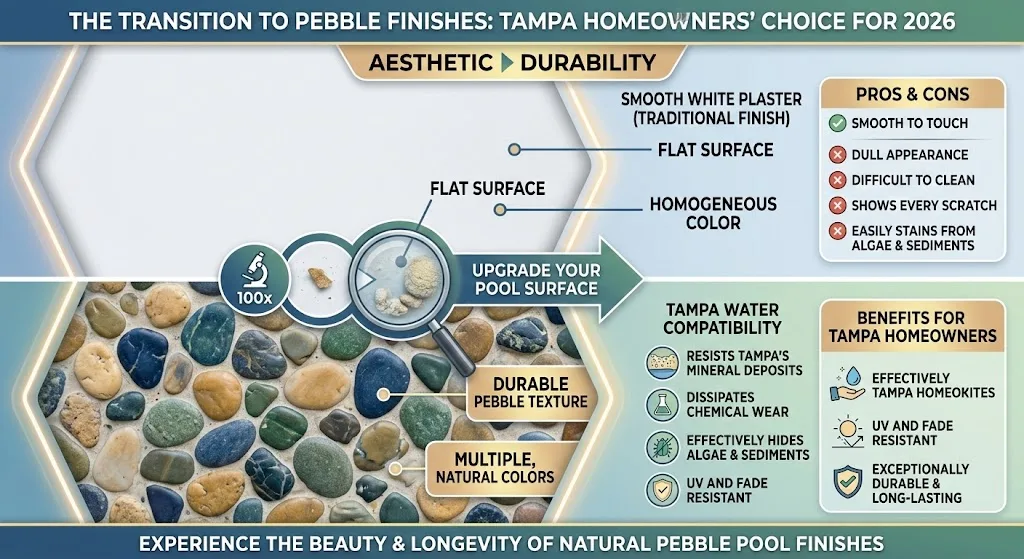
Tampa pool owners are replacing old marcite plaster faster than ever, and pebble finishes are the clear reason why. If your pool surface is cracking, staining, or just looking tired, you're not alone. Thousands of homeowners across the Tampa Bay area are making the switch, and the results speak for themselves.
Thinking about a pool resurfacing upgrade? Call Aqua Coat Pool Plastering at (813) 767-1567 for a free estimate today.
Why Does Tampa's Climate Destroy Standard Plaster So Quickly?
Standard marcite plaster typically lasts 7 to 10 years in Florida conditions, compared to 15 to 20 years in cooler, drier climates. Tampa's combination of intense UV exposure, high humidity (often above 80%), and warm water temperatures year-round accelerates the chemical breakdown of traditional surfaces. The result: rough, discolored, and pitted plaster that becomes a headache to maintain.
Pebble finishes hold up differently. Because they're made from natural river pebbles or quartz aggregate bound together with a cement-based matrix, they're far more resistant to the chemical stress that Tampa pools face daily. We've worked on hundreds of pools in the South Tampa and Westchase areas, and the difference in surface longevity between marcite and pebble is consistent across the board.
What Color Options Come with a Pebble Finish?
Pebble finishes come in a wide range of colors designed to complement Florida's coastal environment. Popular choices for Tampa homeowners include shades that mimic the Gulf Coast waters, like soft turquoise tones reminiscent of Clearwater Beach, warm sandstone hues that echo Sarasota's shoreline, and deep blue-green blends that create that resort-style look right in your backyard.
Most pebble finish lines offer 20 to 40 color options. You can customize the look even further by choosing finer or coarser aggregate, or by adding glass beads for extra shimmer. For homeowners near the waterfront neighborhoods around Davis Islands or Ballast Point, these Gulf-inspired palettes tend to complement the surrounding landscape naturally.
How Do Pebble Finishes Compare to Marcite on Cost and Longevity?
Pebble finishes typically cost $5,000 to $10,000 more upfront than standard marcite for an average-sized residential pool. However, pebble surfaces last 20 to 25 years, while marcite needs full pool resurfacing every 7 to 10 years. Over 25 years, a homeowner who sticks with marcite could pay for two or three full resurfacing jobs, easily exceeding the one-time cost of a quality pebble finish.
There's another number worth knowing: pools with upgraded finishes sell faster and at higher prices. According to industry data from the National Association of Realtors, outdoor living upgrades, including pool renovations, can yield a return on investment of 50% to 70% in warm-weather markets like Tampa. That's a meaningful figure for anyone thinking about resale value.
On top of that, pebble finishes require less chemical intervention to maintain proper water chemistry, which can save Tampa homeowners $200 to $500 per year in chemical costs alone.
Is a Pebble Finish Comfortable and Safe for Kids?
This is one of the most common questions we hear, and it's a fair one. Early pebble finishes had a reputation for being rough underfoot. Today's products are a different story. Modern pebble and quartz aggregate finishes go through a polishing process that smooths the surface while keeping the natural texture that makes them slip-resistant.
For active Tampa families who use their pools daily, that non-slip texture is a real safety benefit. Smooth plaster gets slippery when wet. Pebble surfaces provide consistent grip on steps, entry points, and shallow areas. Our team always recommends a polished pebble option for families with young children, and the feedback from clients in neighborhoods like New Tampa and Carrollwood has been overwhelmingly positive.
How Do You Maintain a Pebble Finish in the Florida Climate?
Maintaining a pebble finish in Tampa comes down to three core habits: consistent water chemistry, regular brushing, and annual inspections.
Water chemistry: Keep your pH between 7.2 and 7.6. Tampa's fill water tends to run slightly alkaline, so test your water at least twice a week during peak summer months (May through September). High pH causes calcium scaling on pebble surfaces, which is difficult to remove once it builds up.
Brushing: Brush your pebble surface once a week with a nylon brush. This prevents algae from taking hold in the small gaps between pebbles, which is especially relevant during Tampa's rainy season from June through September.
Annual inspection: Have a professional check for any micro-cracks or loose pebble sections once a year. Catching small issues early is the difference between a minor repair and a full pool deck resurfacing job. In our experience serving the Tampa area since 1993, homeowners who stay on top of annual checks rarely face major surface problems before year 15.
One more tip: if you run a saltwater system, check your salt chlorinator output regularly. Saltwater pools require slightly tighter chemistry management, and pebble surfaces, while salt-resistant, still benefit from consistent monitoring.
Ready to Upgrade Your Pool? Contact Aqua Coat Pool Plastering
Pebble finishes aren't just a trend. They're a practical, long-term solution for Tampa homeowners who want a pool that holds up against Florida's demanding climate and looks great doing it. The upfront investment pays off in lower maintenance costs, longer surface life, and a backyard that genuinely adds value to your home.
Whether you're dealing with a pool repair in Tampa, Florida, or planning a full renovation, the team at Aqua Coat Pool Plastering has been serving Tampa Bay homeowners since 1993 with thousands of completed resurfacing projects. Call us at (813) 767-1567 to schedule your free estimate and find out which pebble finish is right for your pool.