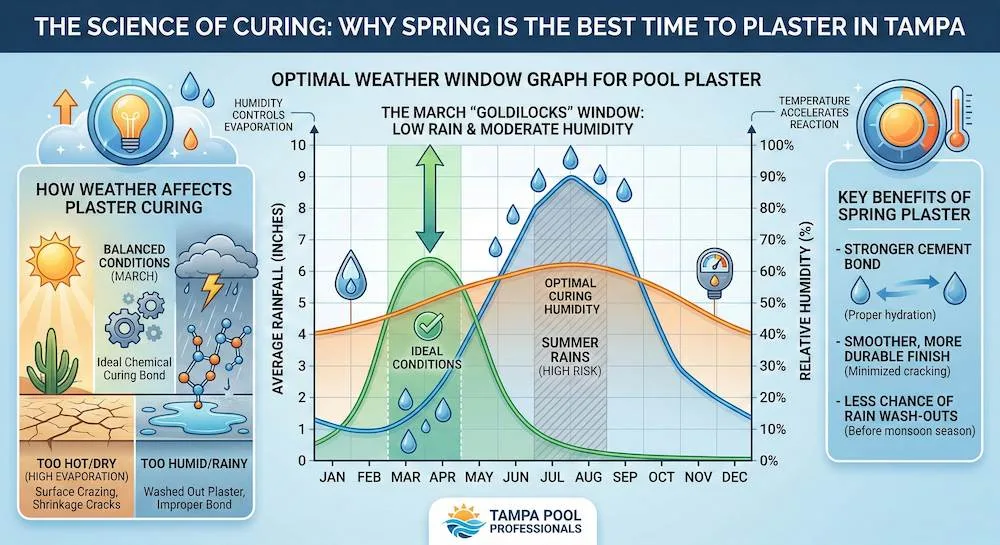
Spring is the sweet spot for pool resurfacing in Tampa, Florida. Moderate temperatures, lower humidity, and calmer weather create near-ideal conditions for plaster to cure properly — and proper curing is the difference between a pool surface that lasts 15-20 years and one that starts showing cracks within the first two.
Ready to resurface before summer hits? Call Aqua Coat Pool Plastering at (813) 767-1567 for a free estimate today.
Why Does Curing Matter So Much for Pool Plaster?
Plaster curing is a chemical process, not just a drying process. When fresh plaster contacts water, it goes through a hydration reaction that determines how hard, dense, and durable the final surface becomes. Get the conditions right, and the plaster bonds tightly and resists staining, etching, and cracking for years. Get them wrong, and you're looking at repairs within months.
Three factors drive that process: temperature, humidity, and the rate at which moisture leaves the surface. Spring in Tampa tends to hit all three in the right range.
What Makes Tampa's Spring Climate So Good for Plastering?
From late February through early May, Tampa typically sees daytime temperatures between 70°F and 85°F with relative humidity around 60-65%. That's a genuinely helpful window. Here's why those numbers matter.
Plaster needs to hydrate at a controlled rate. When temperatures climb above 90°F, moisture evaporates too fast from the surface, which interrupts the curing process before the plaster fully hardens. That rapid moisture loss causes shrinkage cracks — the fine network of lines you sometimes see on older pool surfaces. Spring temperatures slow that evaporation down to a manageable pace, giving the plaster time to cure from the inside out.
Humidity plays a supporting role here too. The moderate spring humidity in Tampa helps maintain surface moisture during the critical first 24-48 hours, which is when the plaster is most vulnerable to premature drying.
In our experience servicing pools across the South Tampa and Westchase areas, spring jobs consistently show better long-term results than those done mid-summer. The plaster hydrates evenly, colors come out truer, and the surface holds up better against the chemical demands of pool water.
Why Do Summer Projects in Tampa Run Into Trouble?
Tampa summers are brutal on fresh plaster. By June, average highs sit around 91°F, and afternoon humidity regularly pushes above 80%. Add in the near-daily thunderstorms that roll through neighborhoods like Carrollwood and Brandon between 2 and 5 p.m., and you've got a scheduling nightmare.
Rain on fresh plaster within the first 24 hours can cause discoloration, surface softening, and uneven curing. Contractors have to work around tight weather windows, which sometimes means rushing or delaying the fill process. A delayed fill — where the pool sits empty after plastering — is one of the most common causes of surface damage we see.
The heat also puts more stress on the curing chemistry. Studies on cementitious materials show that curing at temperatures above 95°F can reduce final compressive strength by up to 30% compared to curing at 73°F. For pool plaster, that translates directly to a shorter lifespan and more frequent repairs.
Starting your pool resurfacing project in spring means the surface has 8-10 weeks to fully cure and stabilize before the summer heat and storm season arrives.
How Should Tampa Homeowners Maintain New Plaster During the Rainy Season Transition?
The first 30 days after plastering are the most critical for long-term durability. Here's what to stay on top of as Tampa moves from spring into the rainy season:
Water chemistry is your top priority. Fresh plaster is alkaline and porous, which makes it highly reactive to pool water chemistry. For the first two weeks, test your water daily. Keep pH between 7.4 and 7.6, total alkalinity between 80 and 120 ppm, and calcium hardness between 200 and 400 ppm. Letting chemistry drift outside these ranges during the curing period can cause permanent etching or staining.
Watch your water level during heavy rains. Tampa's rainy season can dump 2-4 inches in a single afternoon storm. An overfilled pool dilutes your chemistry fast. Check your water level after every significant rain event, especially in the first 60 days.
Run your circulation system continuously for the first 30 days. Constant water movement prevents calcium deposits from forming on the surface during curing. Most homeowners don't realize that dead spots in circulation during this period can cause white calcium nodules — called "plaster dust" — that are difficult to remove once set.
Brush the surface daily for two weeks. This removes plaster dust that forms as the surface hydrates. Use a nylon brush, not a wire brush. Wire brushes scratch fresh plaster and create rough spots that attract algae.
For a complete look at our pool deck resurfacing options and how we prepare surfaces for Tampa's climate, visit our services page.
Does Timing Really Affect the Lifespan of Your Pool Surface?
Yes, by a meaningful amount. Plaster installed under ideal curing conditions — temperatures between 65°F and 85°F, moderate humidity, no rain for 48 hours post-application — can realistically last 15-20 years with proper chemical maintenance. Plaster installed during peak summer heat, with rushed curing or weather interference, often shows visible wear within 7-10 years.
That's a potential difference of 5-10 years on a surface that costs $5,000 to $15,000 to replace depending on pool size, finish type, and scope of work. For most Tampa homeowners, that math makes spring scheduling an easy call.
We've been doing pool resurfacing in Tampa, Florida since 1993, and the pattern holds year after year. Spring jobs hold up better. The science backs it up, and so does the track record.
Need Help Planning Your Pool Resurfacing Project?
Spring books fast for pool contractors in Tampa. Homeowners in areas like South Tampa and New Tampa typically start scheduling in January and February to lock in April and May start dates before the season fills up.
If your pool surface is showing cracks, rough patches, staining that won't clean off, or the plaster is more than 10 years old, now is the right time to get a professional assessment.
Contact Aqua Coat Pool Plastering at (813) 767-1567 to schedule your free estimate. We'll walk you through your finish options, give you an honest timeline, and make sure your pool is ready before Tampa summer arrives.