The 28-Day Curing Guide for Pool Plastering in Tampa, Florida
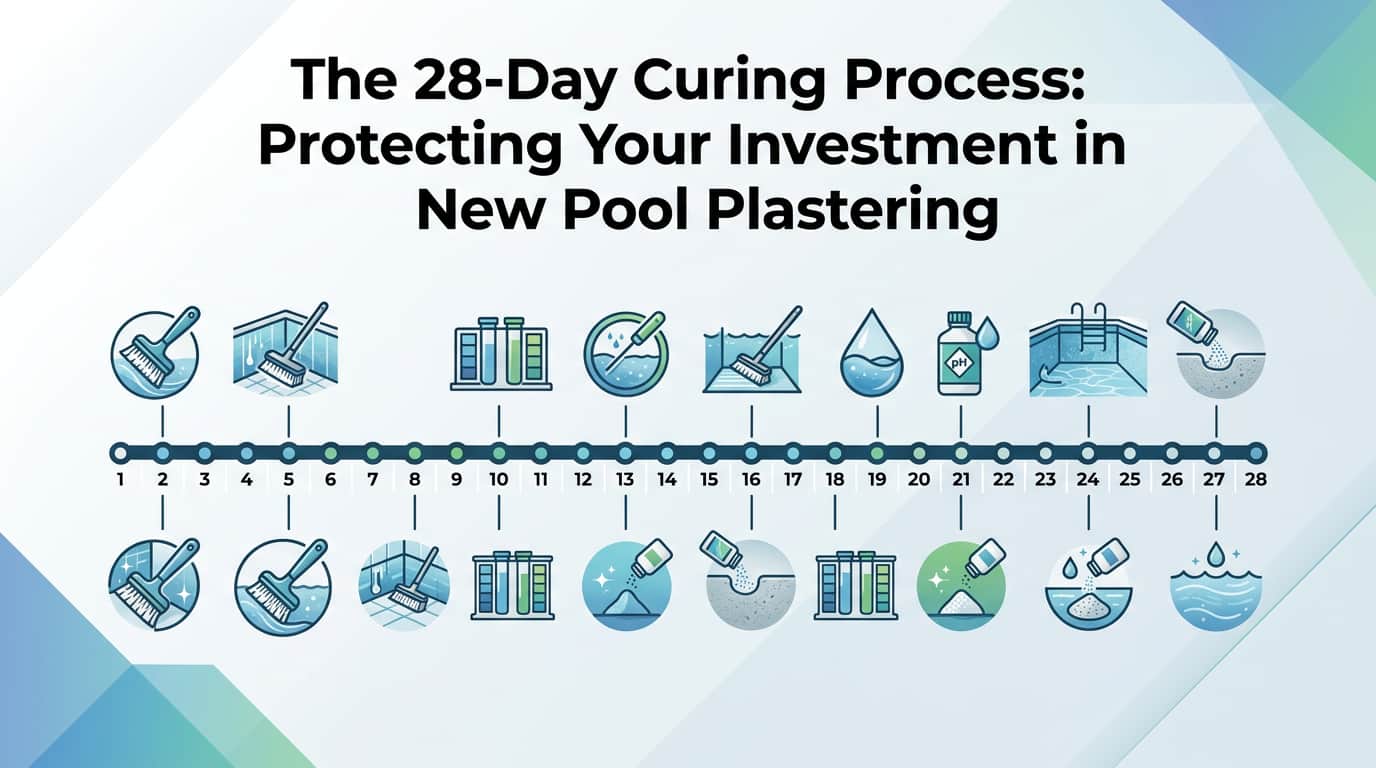
Tampa homeowners love their backyard oases, especially during our long, hot summers. Upgrading your backyard with pool resurfacing requires a delicate 28-day curing process to ensure the finish lasts for decades. Protect your investment by following strict hydration rules right from the start.
Need help with a new project? Contact Aqua Coat Pool Plastering at (813) 767-1567 for expert service in Tampa.
Why is the First Month Critical for Your Pool's Longevity?
The first 28 days determine the lifespan of your new pool finish. During this window, the plaster undergoes chemical hydration, curing underwater to reach its maximum strength of 3,000 PSI. Improper care during this phase causes scaling, staining, or premature failure of the surface.
In our 30 years serving Central Florida, our technicians typically find that 90% of plaster defects stem from mistakes made in the first four weeks. Aqua Coat Pool Plastering understands this delicate chemistry perfectly.
A new surface is soft and highly susceptible to water imbalances. It needs time to harden properly. If you rush the process, you risk ruining a $5,000 to $10,000 investment. The cement requires constant exposure to properly balanced water to form a strong molecular bond. Ignoring these early stages creates microscopic weak points that eventually turn into large cracks or unsightly blemishes.
How Do Florida's Heat and Humidity Impact Chemical Reactions?
Tampa's intense 90-degree heat and 80 percent humidity accelerate the initial curing process, making immediate water filling critical. When the plaster cures too fast in the hot sun, it shrinks and cracks. Filling the pool immediately controls the chemical hydration rate.
The water acts as a temperature regulator. Once the crew finishes troweling, you must fill the pool without stopping until the water reaches the middle of the skimmer tile. If you stop the water flow, a permanent ring will form on the fresh plaster. Homes in neighborhoods like Hyde Park and South Tampa often have mature oak trees.
You must keep leaves out of the filling pool to prevent immediate tannin stains on the soft, uncured surface. The chemical reaction between cement and water takes exactly 28 days to fully stabilize. Our humid climate means the plaster dries extremely fast when exposed to air, so keeping the surface fully submerged is non-negotiable for a flawless finish.
What Are the Daily Maintenance Requirements for New Plaster?
You must brush the entire pool surface twice daily for the first 14 days and test the water chemistry daily. Run your filtration system continuously for the first 72 hours to capture plaster dust. Clean the filter after the third day.
Brushing removes the fine layer of plaster dust that forms as the material cures underwater. If you leave this dust alone, it calcifies onto the walls and creates a rough, sandpaper-like texture. Always use a soft nylon brush. Never use a wire brush on fresh plaster. Quality [pool plastering Tampa, Florida] requires diligent, daily care. We tell our customers near Bayshore Boulevard to set calendar reminders for their brushing routine.
Missing even two days can lead to a rough finish that hurts your feet. Start brushing at the shallow end and push the dust toward the main drain. This daily friction keeps the surface smooth and vibrant.
Which Common Pitfalls Should You Avoid During the First 28 Days?
You must wait 28 days before turning on heaters, salt chlorine generators, or automatic pool cleaners. Salt and heat interfere with the hydration process. Wheeled cleaners will track permanent grooves into the soft, uncured plaster.
Adding salt too early causes severe discoloration and structural weakness in the finish. Heaters increase the water temperature and force the plaster to cure improperly, causing rapid scaling. Wait a full month before introducing these elements. Similarly, do not use any clarifying chemicals or shock treatments. Let the plaster harden naturally. Even a simple pool deck resurfacing project requires care to keep debris out of the fresh pool water. Pets should also stay out of the pool during this time. Their claws easily scratch the soft surface, leaving permanent gouges that ruin the smooth aesthetic you paid for.
How Do You Maintain Water Chemistry to Prevent Scale and Staining?
Keep the pH between 7.2 and 7.6 and total alkalinity between 80 and 120 parts per million. These specific ranges prevent the water from becoming too aggressive or too scale-forming. Test the water every single day during the curing month.
Fresh plaster constantly raises the pH of your water as it releases calcium hydroxide into the pool. You will need to add small amounts of muriatic acid regularly to bring the pH down. If the pH rises above 7.8, calcium scales will form on the walls. If it drops below 7.0, the acidic water will literally eat away the new plaster. Use a high-quality liquid test kit. Test strips are not accurate enough for this critical phase.
You also need to monitor calcium hardness, keeping it around 200 to 400 parts per million. Expert [pool plastering Tampa, Florida] relies on perfect chemistry. We recommend keeping a detailed log of your daily test results to track any rapid changes in the water balance.
The Bottom Line on Protecting Your Investment
The 28-day curing period requires patience, daily brushing, and precise chemical balancing. Following these strict guidelines ensures your [pool plastering Tampa, Florida] looks beautiful and lasts for decades. Your backyard is a major asset. Protect it with the right care routine.
Ready to upgrade your outdoor living space with a brand-new finish? Contact Aqua Coat Pool Plastering at (813) 767-1567 to schedule your consultation and get a free estimate today.